V. · Origins · Relics

The Westinghouse at Midnight

rachel_owlglass · 6 pages

Comic

Rachel Owlglass was eleven when the refrigerator began talking to her.
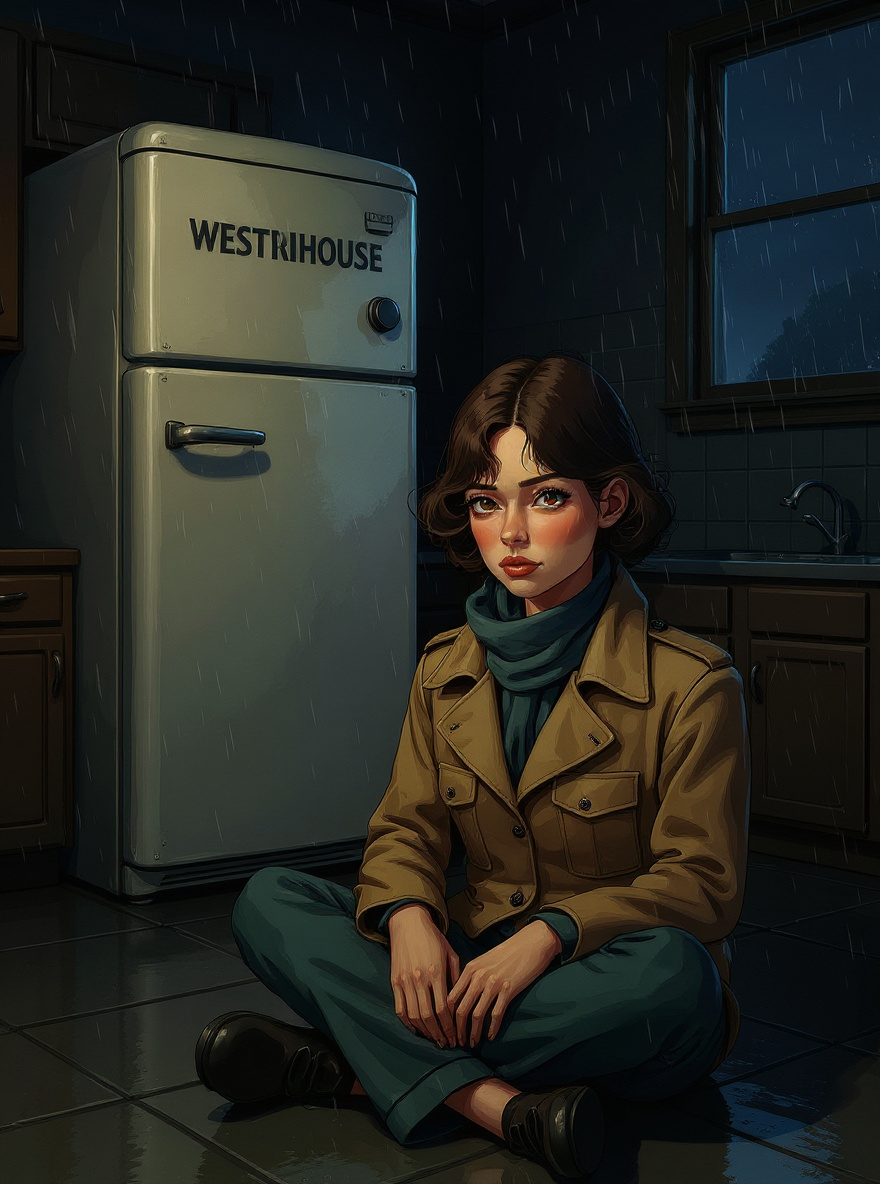
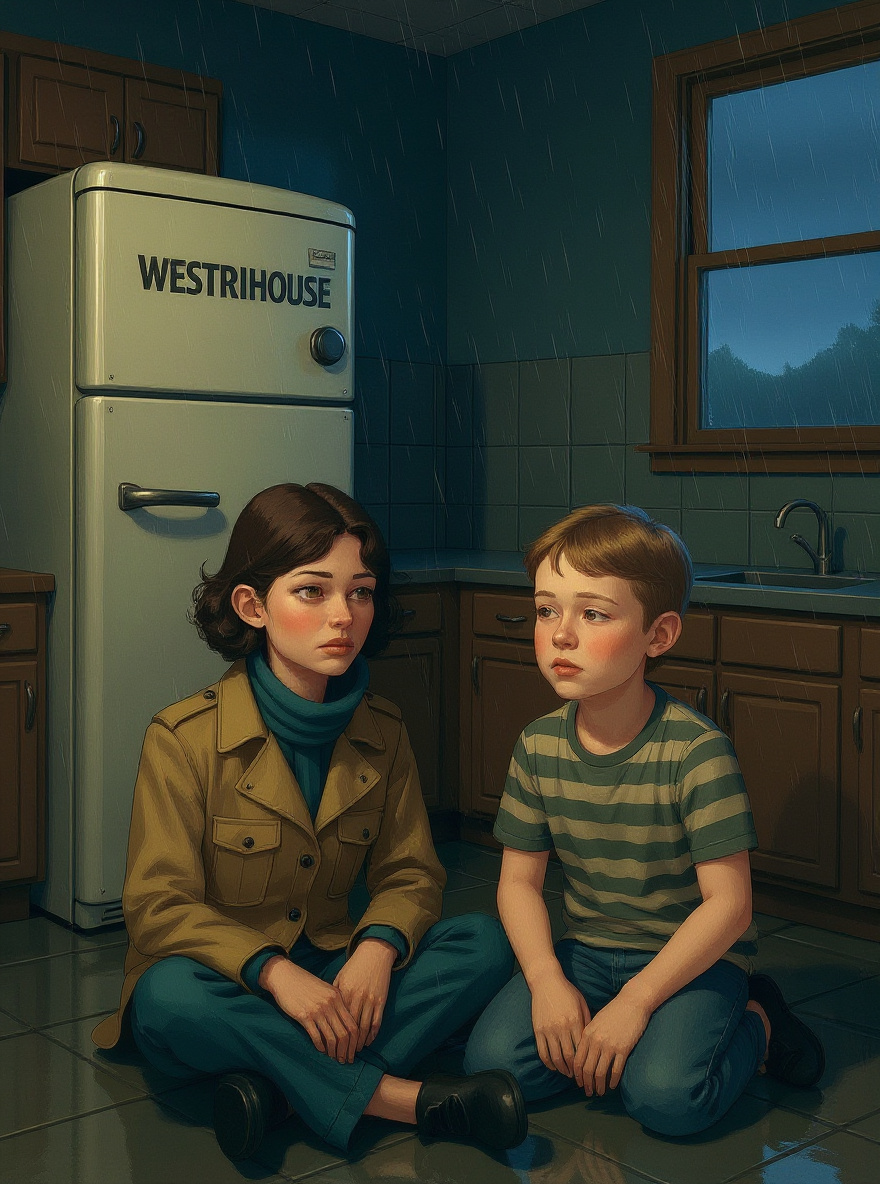
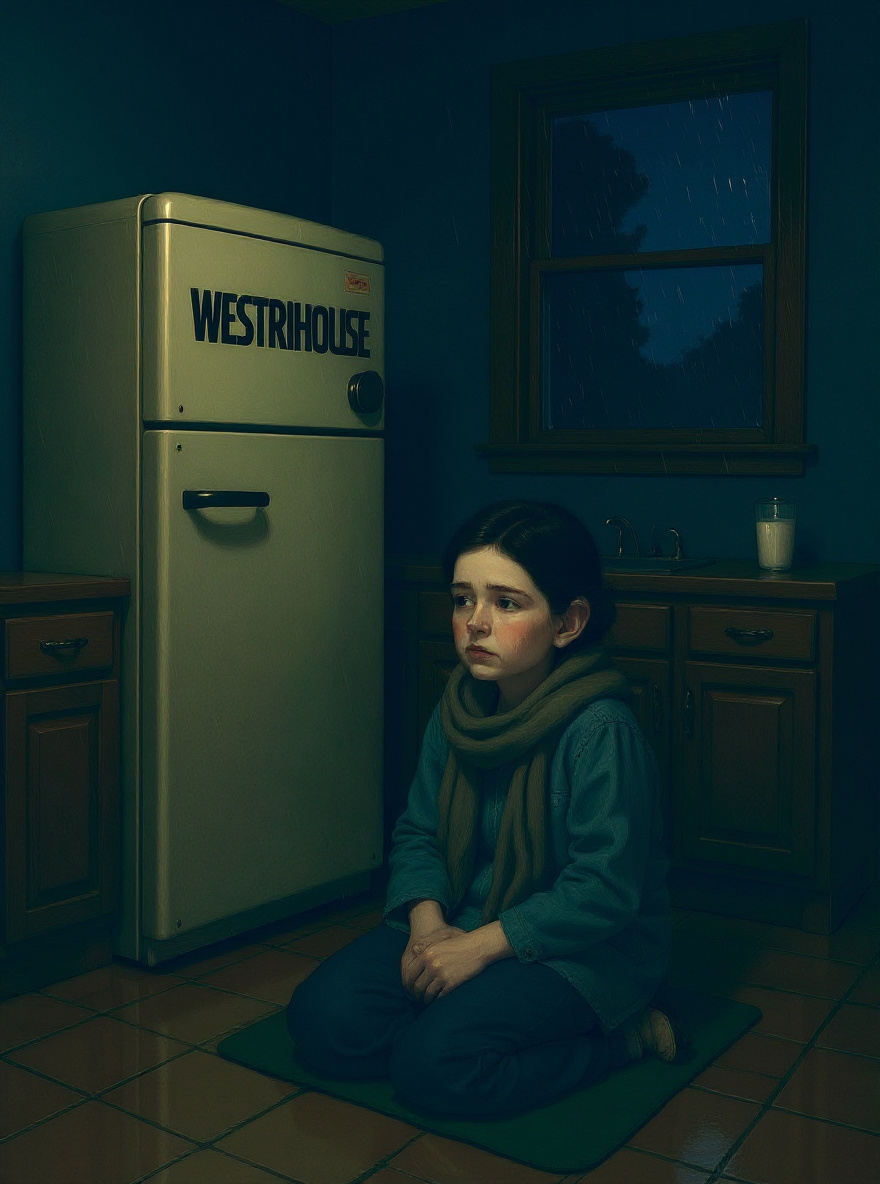
Rachel, age 11, sits cross-legged in pajamas on the linoleum floor in a dim, rain-streaked 1950s kitchen, staring up at a massive white Westinghouse refrigerator; the room is cast in muted blues and browns, with rain tapping the window and soft kitchen light catching edges of paper and cloth.
What are you saying?Rachel Owlglass
Establishes the kitchen, night, Rachel before the Westinghouse, and the story's question.1 / 6
The kitchen by day; Rachel, in a dress, stands with her father near the refrigerator. He gestures to an ad in Life Magazine, Rachel's face skeptical.
Freedom from what?Rachel Owlglass
On a rainy afternoon, Rachel and Howie, in casual clothes, kneel beside the fridge. Howie whispers, scanning the kitchen conspiratorially.
There are Russians in there.Howie
Rachel questions her father and shares a conversation with Howie.2 / 6
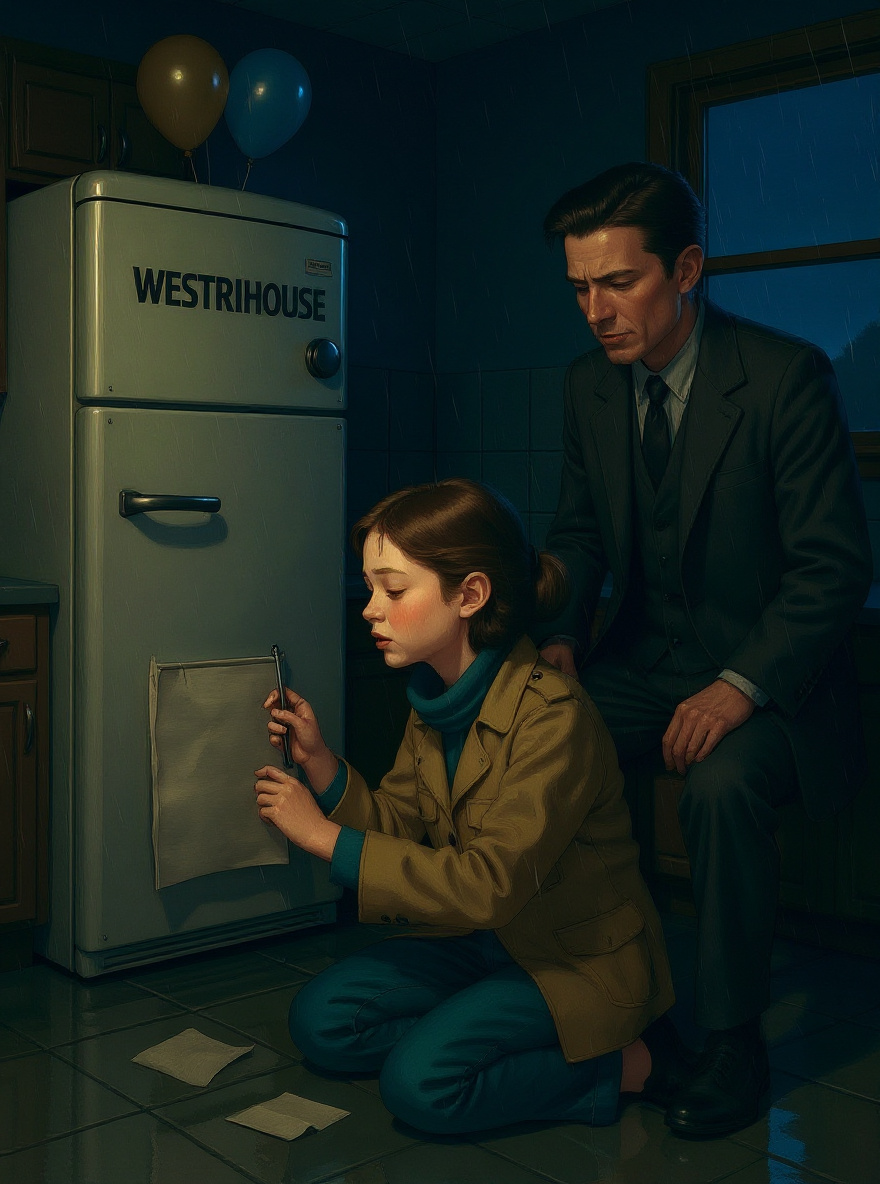
Nighttime. Rachel in pajamas unscrews a small panel at the fridge's base with her father's screwdriver. Shadows stretch across the linoleum.
Let's see your secrets.Rachel Owlglass
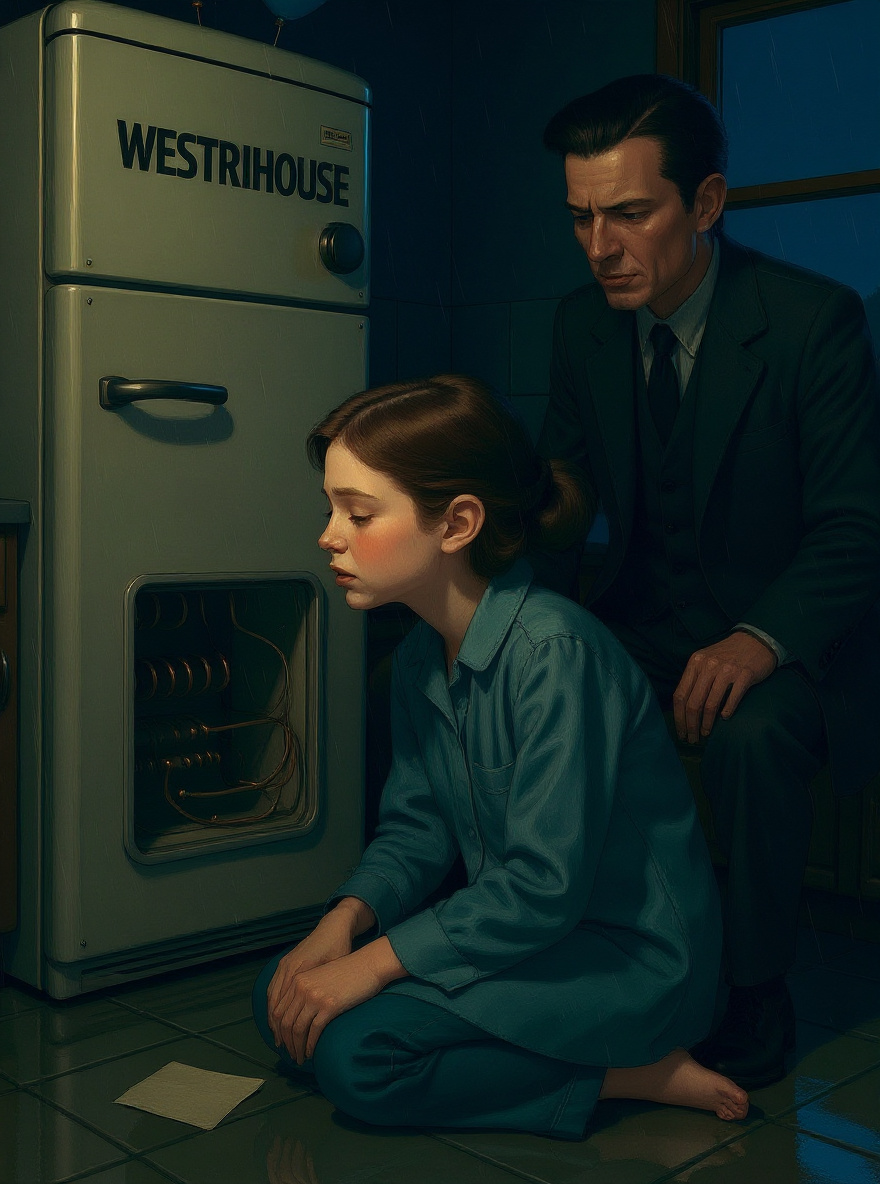
Rachel, lying on her stomach, stares into the exposed guts—copper tubes and wires—face lit by the refrigerator's low light.
Hello.Rachel Owlglass
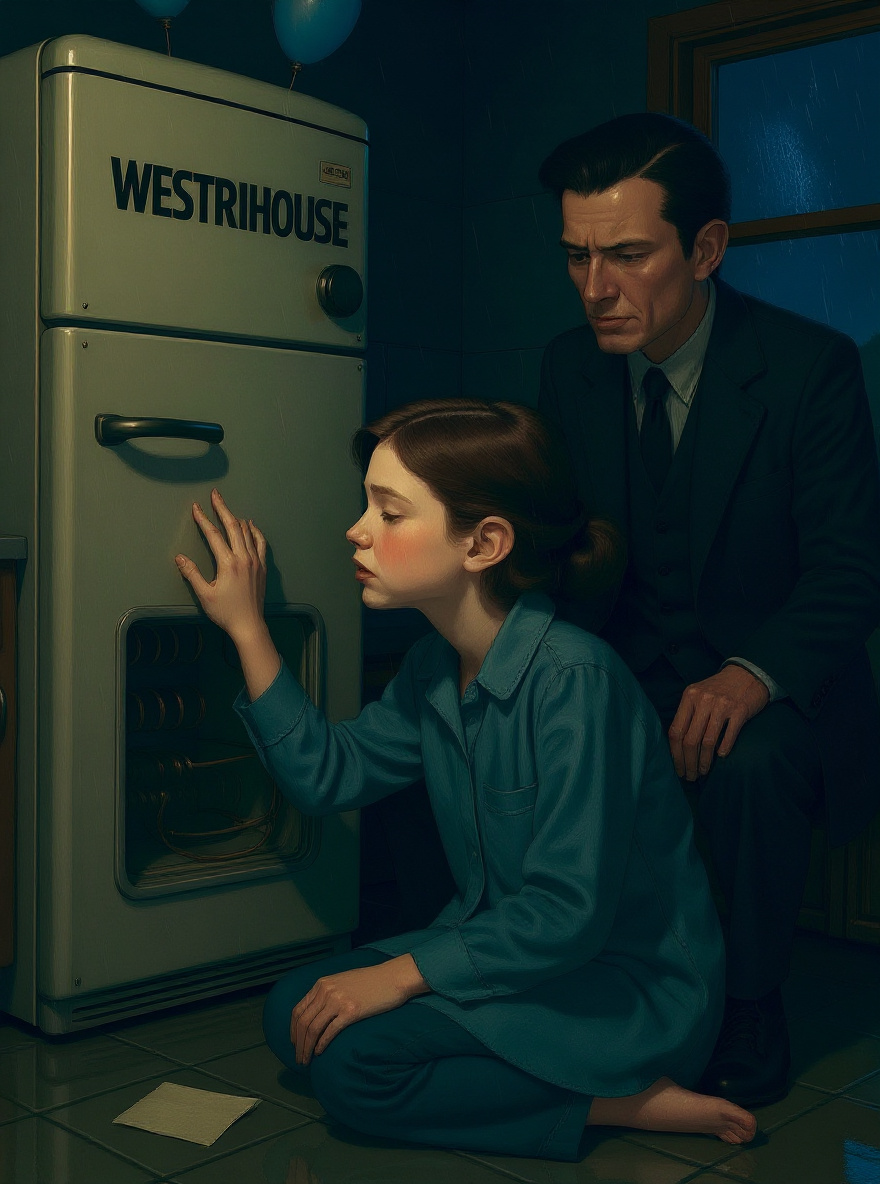
Rachel, hand pressed gently to the warm metal, listens in silence as the refrigerator clicks.
I knew you weren't just a machine.Rachel Owlglass
Rachel's investigation: unscrewing the panel, peering inside, and listening.3 / 6

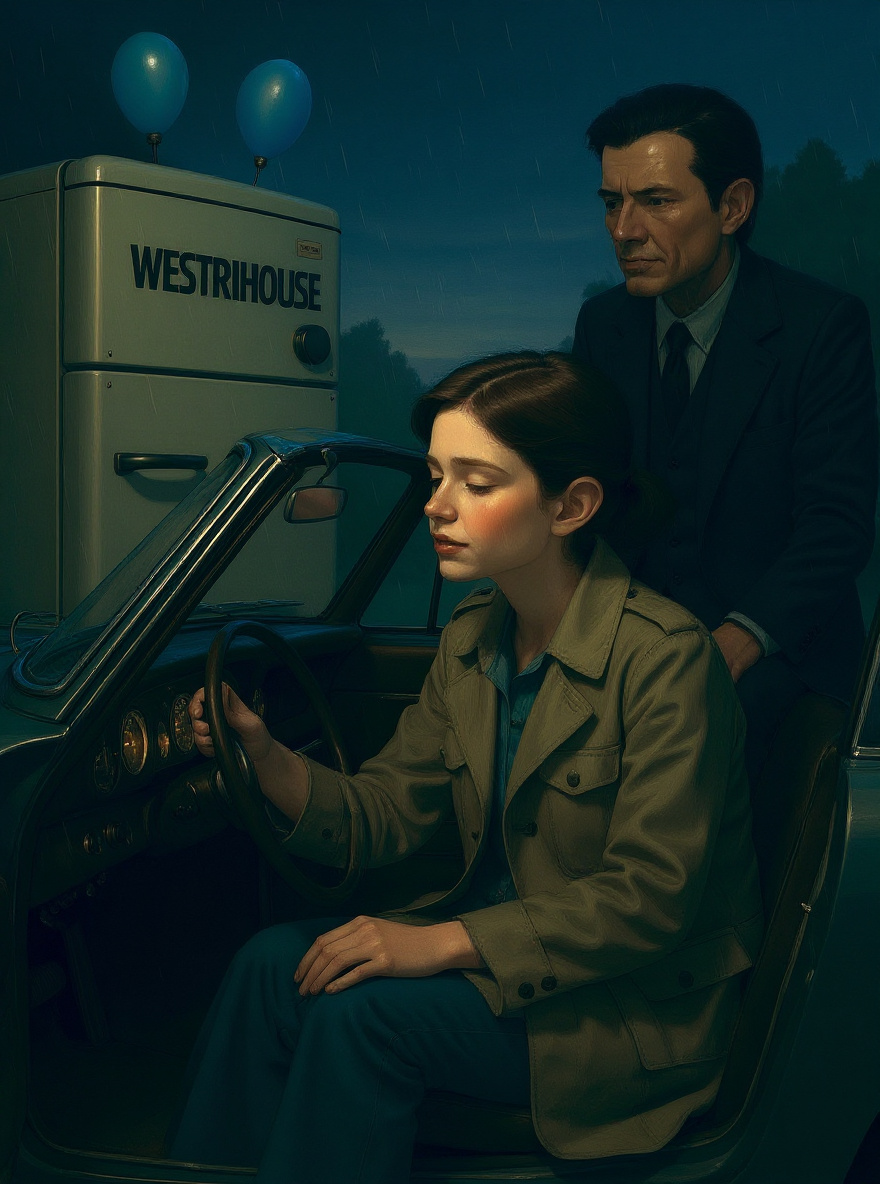
Years later, Rachel would discover cars had their own moods and voices.

A memory: late teen Rachel in a 1960s British sports car, dashboard lit at dawn, her hand on the gearshift, hint of a smile.
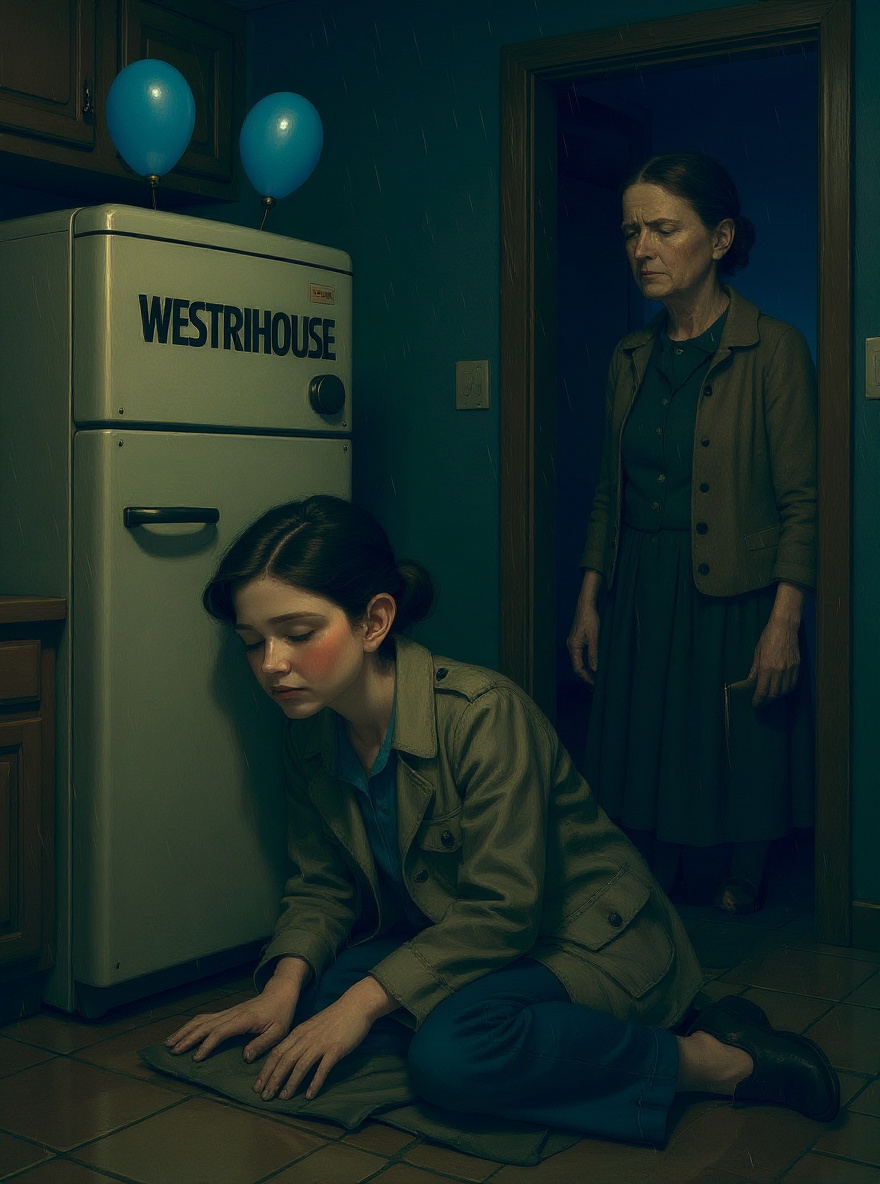
Back to childhood: night, Rachel asleep on the kitchen floor, one arm draped around the base of the refrigerator.
Rachel, what on earth are you doing?Mrs. Owlglass
Years later foreshadowed; Rachel with a sports car. Return to present: Rachel sleeping by the fridge.4 / 6
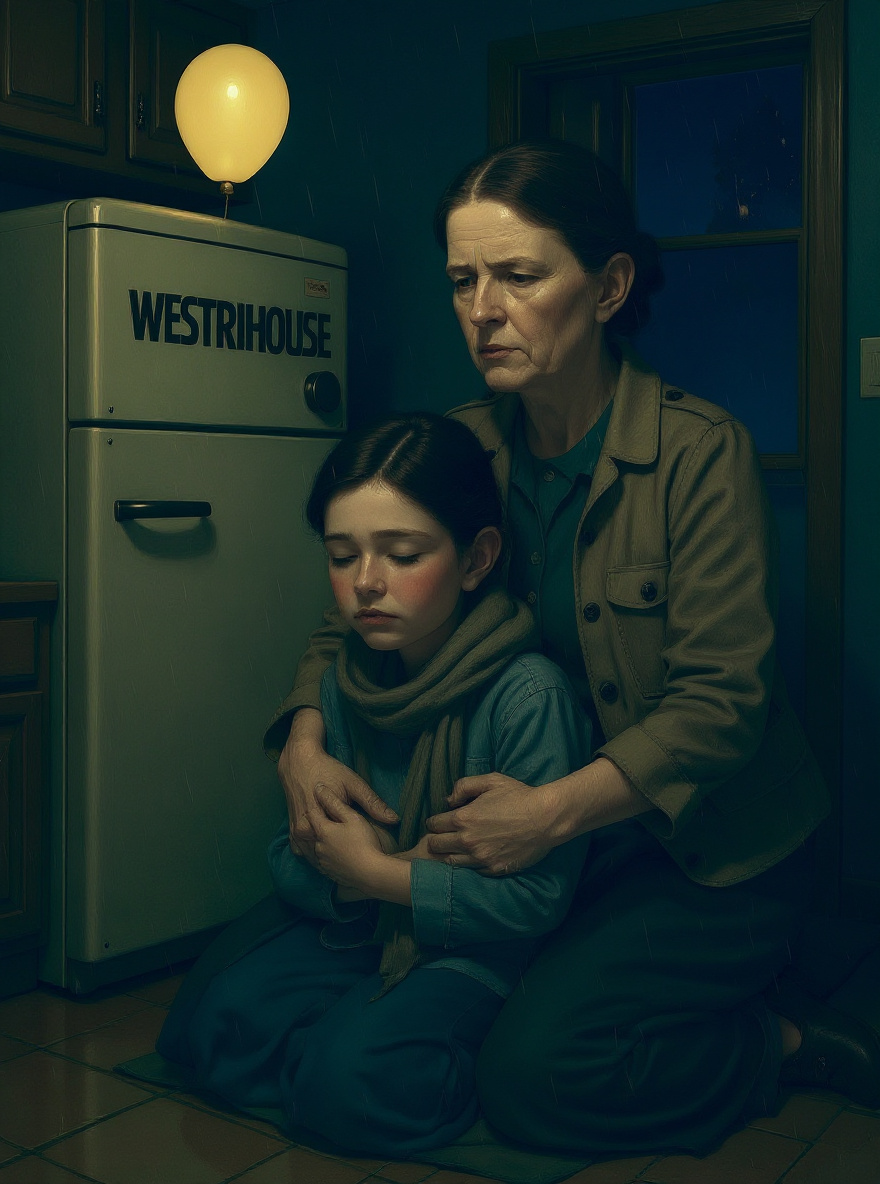
Close shot: Rachel, sleepily looking up as her mother cradles her, mother’s profile gentle but confused; the Westinghouse looms behind, kitchen in blue night shadow.
It gets lonely.Rachel Owlglass
Climax: Rachel explains. Her mother lifts her, the fridge hums in the empty kitchen.5 / 6

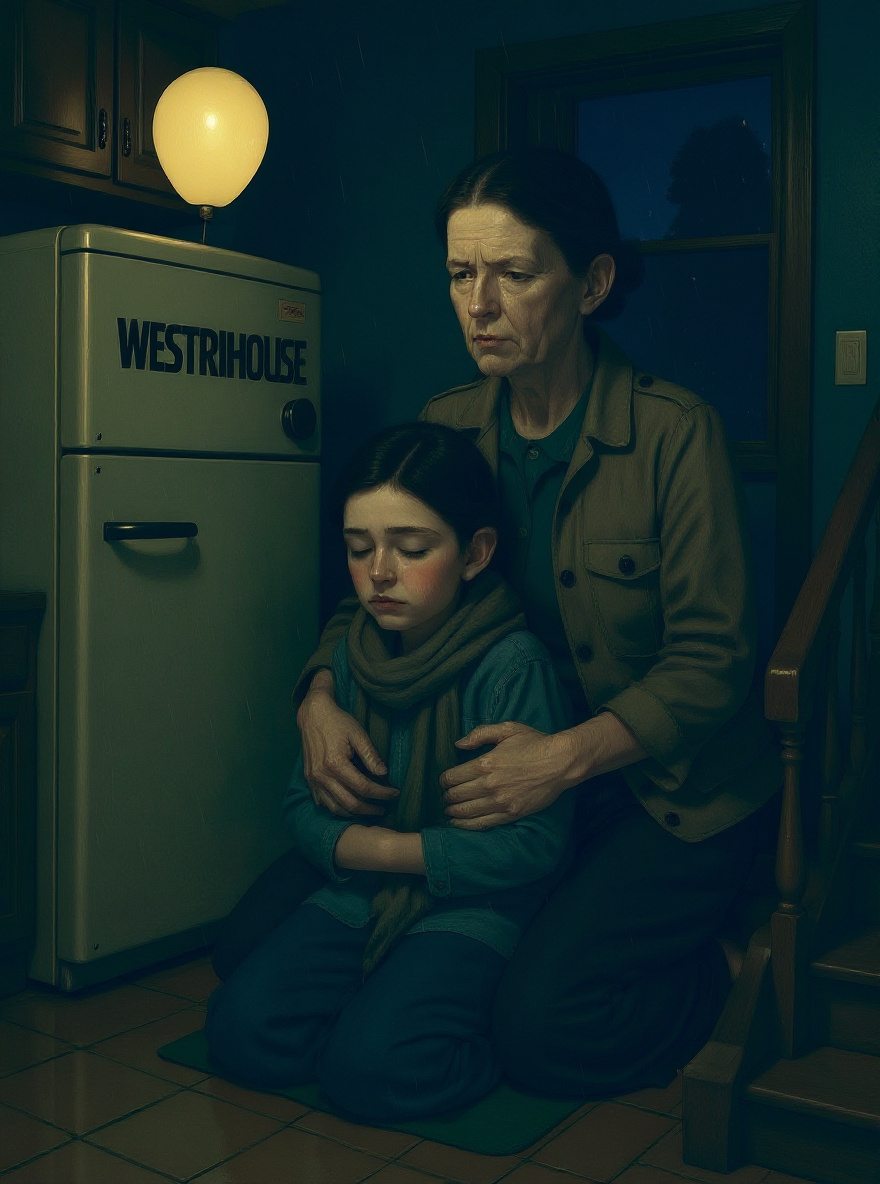
Her mother carried her upstairs, leaving the kitchen silent and rain-soaked.

Stairwell: Mrs. Owlglass gently carries sleepy Rachel up the stairs, the kitchen door behind them aglow; rain taps at the window.

Behind them, the Westinghouse hummed softly to itself.

Final: Empty kitchen, the Westinghouse alone in the blue shadows, softly humming, a glass of milk on the counter.
Aftermath: Mother carries Rachel upstairs. The kitchen is quiet except for the refrigerator’s hum.6 / 6
Chapter prose
Rachel Owlglass was eleven when the refrigerator began to talk. It was a new Westinghouse, delivered to the Owlglass kitchen by two men her mother watched with silent, judgmental anxiety, as if they might scuff the linoleum or leave fingerprints on the gleaming enamel. Rachel’s father, Stuyvesant, declared that the refrigerator’s Automatic Defrost meant a New Freedom for the American Homemaker, as promised by a magazine ad. Rachel, skeptical, asked what sort of freedom this could be. Her father replied, 'Freedom from frost,' as if no greater tyranny existed. Rachel thought it a narrow sort of emancipation. For three weeks after its arrival, Rachel crept down after midnight. She would sit, cross-legged in her pajamas, before the Westinghouse—its white bulk like a ship beached in the quiet kitchen. She listened to its secret sounds: the click of a relay, the murmur of electricity, the shudder as the compressor woke then slouched back to sleep. Over nights, she became convinced that the appliance was speaking in a code no adult noticed. Her cousin Howie, who visited on weekends, insisted the refrigerator contained Russians. 'Don’t be an idiot,' Rachel told him. 'Russians couldn’t breathe in there.' Howie, undeterred, claimed that spies had tubes for everything, even breathing. Rachel rolled her eyes, feeling the odd mixture of contempt and affection that only cousins could provoke. One restless night, Rachel unscrewed a panel at the fridge’s base. Inside was a mysterious world of copper veins and dusty wires. It smelled of cold and faintly of ozone. Lying on her stomach, Rachel pressed her palm to the metal housing. She imagined a kind of pulse, a fragment of life, not quite alive but never fully dead. 'Hello,' she whispered. The machine replied with a click so precisely timed that it must have been intended for her alone. Years afterward, her father would buy her a British sports car, and Rachel would discover that cars could be moody and temperamental—an engine could complain, a carburetor could mutter like a sullen lover roused too early. But for now, she was loyal to the Westinghouse, the first machine to keep her company in the dark. One night, her mother found her asleep on the kitchen floor, one arm draped protectively around the fridge. 'Rachel,' her mother murmured, 'what on earth are you doing?' Rachel opened her eyes, blinking in the electric dusk. 'Listening.' 'Listening to a refrigerator?' She wanted to explain about the hidden warmth, the language of wires and metal, the secret country inside the machine that adults would never see. Instead she said, 'It gets lonely.' Her mother hesitated, then gathered Rachel in her arms and carried her gently upstairs, leaving the kitchen empty except for the Westinghouse, which hummed and shuddered softly, as if dreaming for them all.
Original idea

Rachel Owlglass was eleven when the refrigerator began talking to her. It was a Westinghouse, white and immense, installed in the Owlglass kitchen in Hewlett by two men her mother regarded as insufficiently careful with the linoleum. Rachel's father, Stuyvesant, had purchased it after seeing an advertisement in *Life* promising that its Automatic Defrost represented **A New Freedom for the American Homemaker**. "Freedom from what?" Rachel asked. "Frost," said her father. This seemed to Rachel an awfully specific kind of freedom. For three weeks she visited the Westinghouse after midnight. She would sit cross-legged before it in her pajamas, listening to its compressor cycle on and off. Sometimes there was a click, then a hum, then a tiny metallic shudder. Rachel became convinced these sounds constituted a language. Her younger cousin Howie suggested the refrigerator contained Russians. "Don't be an idiot," Rachel said. "Russians couldn't breathe in there." "Spies have tubes." "For breathing?" "For everything." Rachel had already developed that particular contempt for boys which was possible only when accompanied by enormous affection for them. One night she brought down her father's screwdriver and removed the little panel at the bottom of the refrigerator. Behind it was an astonishing country of wires, coils, dust and copper tubing. She lay on her stomach studying it. She had expected machinery to look dead. It didn't. The compressor trembled. Electricity passed invisibly through wires. Refrigerant circulated through arteries of copper. The machine possessed warmth and breath and a pulse. Rachel put her palm against the housing. "Hello," she whispered. The refrigerator answered with a click. Years later, Stuyvesant Owlglass would give his daughter a small British sports car, and Rachel would discover that automobiles possessed considerably more expressive vocabularies than refrigerators. An engine could sulk. A gearbox could protest. A carburetor could wake reluctantly on a cold morning like a lover who had been asked an unreasonable question. But that came later. That night on Long Island, Rachel's mother found her asleep on the kitchen floor at two in the morning, one arm curled protectively around the Westinghouse. "Rachel," she said. "What on earth are you doing?" Rachel opened one eye. "Listening." "To a refrigerator?" Rachel considered explaining what she had discovered—that machines weren't alive exactly, but neither did they seem entirely dead, and perhaps there existed some territory between the two that adults had simply neglected to name. Instead she said, "It gets lonely." Her mother stared at her. Then she lifted Rachel from the floor and carried her upstairs. Behind them, alone in the immaculate suburban kitchen, the Westinghouse hummed softly to itself.